


Religious events allowed in CSR ?

Short answer:
Purely religious events (puja, satsang, pravachan, yatra, etc.) are not treated as eligible CSR activities in India;
However, CSR support can be given to secular, public‑benefit projects even if implemented by faith‑based organisations, provided they fall strictly under Schedule VII and are clearly ring‑fenced from religious worship or proselytisation.[ see source : business-standard]

What is allowed
Under Section 135 of the Companies Act and Schedule VII, CSR must relate to specified areas like education, health, livelihood, environment, heritage, rural development, disaster relief, etc., and must be for public benefit. If a religious/faith‑based organisation runs a project in these areas (e.g. free school, hospital, skill centre, old‑age home) and accounts are kept separate from religious activity, CSR funding to that project is permissible.
The key point is that the activity funded must be secular, inclusive and available to the public, not restricted to followers of one religion.[ see source : khaitanco]
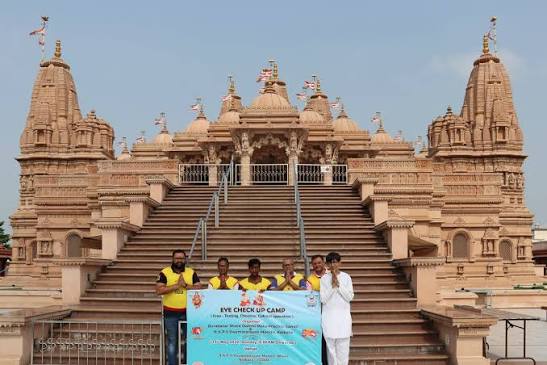
Picture shows an Eye Camp at a Temple. Allowed – Yes
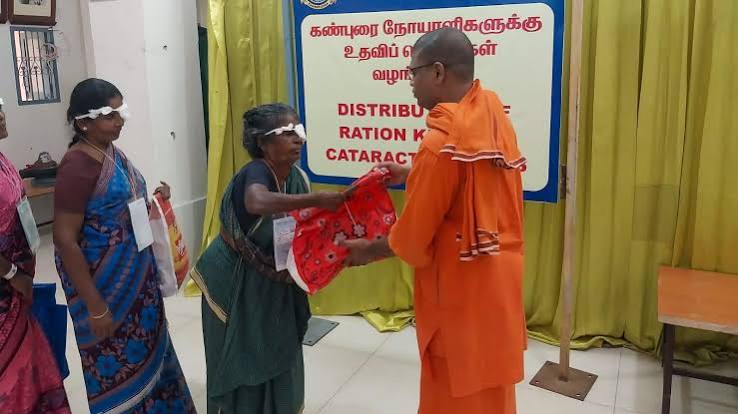
Picture shows an Cataract Operations Eye Camp at a Temple. Allowed – Yes
Example: Funding a free eye‑camp organised in a temple premises but open to all communities, with separate CSR documentation and reporting, is generally acceptable; funding the temple’s daily aarti or renovation as a place of worship is not.[See Related Source : linkedin]

What is not allowed
Several policies and clarifications explicitly state that activities “concerned with religion like construction of temple/mosque etc.” are not to be treated as CSR.
Donations for religious rituals, spiritual discourses, propagation of a particular faith, or renovation/expansion of places used mainly for worship do not qualify as CSR spend.
One‑time events like religious festivals, processions, or devotional concerts also do not meet CSR criteria, especially where they are primarily for brand visibility or community goodwill rather than Schedule VII objectives.[ See Related Source : itdc.co]

Grey areas and practical structuring
Faith‑linked events with a strong social component (health camp during a religious mela, disaster‑relief distribution through a gurudwara, mid‑day meals at a religious school) may be structured as CSR if: the CSR spend is strictly on the social component, the event is open to all without religious conditions, and documentation clearly shows outcomes in permitted Schedule VII categories. In practice, many companies adopt internal CSR policies that outright abstain from any activity with religious overtones to avoid regulatory and reputational risk, even if technically arguable.[See Related Source : itdc.co]
Suggested approach for your companies
For any business group, a safe approach is to treat “religious events” as non‑CSR and instead design secular programmes that may be operationally anchored at community or faith‑based locations but are clearly documented as health, education, livelihood, environment or heritage activities under Schedule VII.
Ensure separate bank accounts, ledgers and communication for CSR projects, and avoid photographs, reports or publicity that emphasise worship rather than social impact.[taxguru]
To advise clients or structure your own CSR, it will help if you share the type of religious event you have in mind (e.g. temple renovation, health camp during navratri, langar, etc.).
