Acronym of MLG Stands for… ( MLG Associates, Chartered Accountants )

Monthly Archives: September 2026

Acronym of MLG Stands for… ( MLG Associates, Chartered Accountants )

What “MLG” Stands For at MLG Associates:


Our Operational Philosophy & Service Framework

At MLG Associates, our name represents more than an acronym—it reflects our multidisciplinary approach to corporate finance, statutory compliance, tax advisory, and enterprise resource management.
Operating at the intersection of regulatory governance and operational technology, MLG Associates serves as a trusted partner for growing businesses, industrial enterprises, and corporate groups. Below is a detailed breakdown of what the MLG acronym stands for within our practice, highlighting the specific skills, services, and execution capabilities we deliver to our clients.

1. Maximise

M =  Maximizing Compliance & Tax Efficiency

The first pillar of MLG Associates focuses on robust statutory alignment, financial governance, and strategic tax planning across direct and indirect taxation systems.

                    [ TAXATION & COMPLIANCE PILARS ]
                                   │
      ┌────────────────────────────┼────────────────────────────┐
      ▼                            ▼                            ▼
[ DIRECT TAXATION ]      [ INDIRECT TAXATION ]        [ CORPORATE COMPLIANCE ]
• Income Tax Returns     • GST Audit & Reconciliation • Companies Act Filings
• Assessment Appeals     • Input Tax Credit (ITC)     • Secretarial Audits
• International Tax      • Customs & Foreign Trade    • RoC Statutory Returns

Direct Taxation & Tax Representation

Our practice handles comprehensive direct tax administration for private limited companies, firms, and high-net-worth individuals.
  • Corporate Tax Planning: Structuring business operations to optimize tax liabilities within the framework of the Income Tax Act, 1961.
  • Scrutiny & Assessment Representation: Representing clients before Income Tax authorities, drafting submissions, and handling appellate matters.
  • International Taxation & Transfer Pricing: Assistance with cross-border transactions, Form 15CA/CB certifications, and transfer pricing documentation.

GST & Indirect Tax Advisory

We manage end-to-end GST frameworks to eliminate leakage and ensure seamless Input Tax Credit (ITC) flow.
  • GST Health Checks & Audits: Periodic reconciliation of GSTR-1, GSTR-3B, and GSTR-2B to prevent mismatches and statutory notices.
  • Departmental Representations: Drafting replies and managing proceedings for show-cause notices (SCNs) and departmental audits under GST.

Statutory Audits & Governance

Under strict adherence to ICAI Standards on Auditing (SAs), our firm carries out independent assurance engagements:
  • Statutory Financial Audits: Independent verification of financial statements under the Companies Act, 2013.
  • Tax Audits (Section 44AB): Comprehensive examination of books of accounts for tax compliance.
  • Internal Financial Controls (IFC): Reviewing and testing internal control mechanisms across enterprise workflows.


2. Leverage

L = Leveraging Business Technology & Outsourced CFO Services

Modern financial control requires more than traditional bookkeeping; it demands deep operational integration with accounting technologies, Enterprise Resource Planning (ERP) tools, and structured management oversight.

Enterprise Accounting & Financial Systems (Finsys ERP & Tally)

MLG Associates holds specialized experience in aligning accounting protocols with industrial manufacturing workflows and ERP systems (such as Finsys ERP and Tally Prime).
  • ERP System Implementation & Audit: Assisting manufacturing clients in setting up financial modules, inventory flow tracking, and BOM (Bill of Materials) costing within Finsys and similar ERP systems.
  • Chart of Accounts (CoA) Standardization: Designing structured ledgers and cost-center accounting architectures for multi-plant manufacturing operations.
  • ERP Data Reconciliation: Independent validation of inventory movements, production logs, and financial postings within enterprise software.

Virtual CFO & Financial Management Support

For mid-sized corporates and industrial groups requiring senior-level financial direction without a full-time in-house executive:
  • Cash Flow Management & Treasury: Working capital monitoring, fund-flow projections, and liquidity management.
  • MIS & Operational Reporting: Preparing customized monthly Management Information System (MIS) reports, profitability segmentations, and variance analyses.
  • Budgeting & Variance Control: Establishing annual operating budgets and tracking cost overruns across business units.
                   [ VIRTUAL CFO & ENTERPRISE SYSTEMS ]
                                    │
      ┌─────────────────────────────┼─────────────────────────────┐
      ▼                             ▼                             ▼
[ ERP ALIGNMENT ]          [ VIRTUAL CFO SERVICES ]       [ MIS & ANALYTICS ]
• Finsys ERP Workflows      • Cash Flow Management        • Plant Profitability
• Tally Architecture        • Working Capital Control     • Variance Analysis
• Cost-Center Setup         • Treasury & Banking Ops      • Cost Breakdown

3. G for Growth

G =  Driving Enterprise Growth, Project Finance & Structuring

The third dimension of MLG Associates centers on enabling corporate expansion, project finance modeling, debt syndication, and financial risk advisory.

Project Finance, Debt Syndication & CMA Preparation

We assist industrial clients in securing debt capital and structured credit facilities for expansion, greenfield projects, and working capital needs:
  • Detailed Project Reports (DPR): Drafting technical and financial feasibility reports for banking institutions and credit committees.
  • CMA Data Preparation: Preparing Credit Monitoring Arrangement (CMA) data, projected cash flow statements, and debt service coverage ratio (DSCR) calculations for working capital and term loan appraisals.
  • Bank Representation & Credit Assessment: Facilitating communication with financial institutions during credit appraisal and loan documentation processes.

Capital Restructuring & Business Valuations

  • Corporate Restructuring: Advising on capital structure optimization, debt-to-equity ratios, and financial re-engineering.
  • Business & Asset Valuation: Conducting financial valuations for legal, compliance, tax, or investment purposes using DCF (Discounted Cash Flow) and asset-based methodologies.
  • Transaction Advisory & Due Diligence: Performing buy-side or sell-side financial due diligence for business acquisitions or joint ventures.

Service Matrix: Core Competencies at a Glance

Pillar Service Category Practical Skills & Execution Capabilities
Maximizing Compliance Direct Taxation Income Tax filings, Scrutiny Appeals, Transfer Pricing, Form 15CA/CB.
Indirect Taxation GST Returns, ITC Reconciliations, Departmental Audit Defense.
Statutory Assurance Statutory Audits, Tax Audits (Sec 44AB), IFC Framework Testing.
Leveraging Systems ERP Alignment Finsys ERP & Tally configuration, Costing & Inventory Module Alignment.
Virtual CFO Cashflow Optimization, Working Capital Control, Management Reporting.
Internal Controls SOP Design, Inventory Audits, Process Control Reviews.
Growing Enterprise Project Finance Detailed Project Reports (DPR), CMA Preparation, DSCR Modeling.
Debt Syndication Banking Approvals Support, Term Loans, Working Capital Structuring.
Business Advisory Corporate Valuations, Financial Due Diligence, Capital Restructuring.

Contact & Consultation

For professional queries reach out to our office:
  • Primary Practice Areas: Taxation, Audit & Assurance, Virtual CFO, Project Finance, ERP Advisory
  • Also regarding Accounting, BPO, Taxation, Audits, Compliance, tax representation, ERP integration, or project financing,


GSTR-1 Due Date Alert: Filing Guide, Benefits & Penalties | MLG Associates

GSTR-1 Due Date Alert: Complete Filing Guide, Benefits, and Late Penalties

Tomorrow is the 11th of the month, the statutory deadline for regular taxpayers to file their monthly GSTR-1.

Delaying your GSTR-1 doesn’t just attract late fees—it directly damages your business relationships by freezing your buyers’ input tax credit (ITC). Here is an urgent overview of what GSTR-1 entails, why timely filing matters, and the penalties for non-compliance.

1. What is GSTR-1?

GSTR-1 is a monthly or quarterly return that records all outward supplies (sales) made by a registered taxpayer under GST.

It does not require tax payment directly; instead, it serves as the official declaration of:

  • B2B Invoices: Sales made to other GST-registered entities.

  • B2C Supplies: Large and small sales to unregistered individuals or end consumers.

  • Credit & Debit Notes: Any amendments or rate adjustments made to past sales invoices.

  • Exports & Nil-Rated Supplies: Zero-rated, exempt, and non-GST sales.

Once filed, the data flows automatically into your buyers’ GSTR-2B, enabling them to claim their rightful tax credit.

2. Who Must File by Tomorrow?

  • Monthly Filers: Every registered regular taxpayer with an aggregate turnover exceeding ₹5 Crore (or those who opted for monthly filing under the QRMP scheme) must file on or before the 11th of every month.

  • (Note: Taxpayers enrolled in the quarterly QRMP scheme file quarterly by the 13th of the month following the quarter, but can upload B2B invoices using the Invoice Furnishing Facility (IFF) by the 13th).

3. Benefits of Timely GSTR-1 Filing

  • Protects Buyer Relationships: When you file on time, your invoices auto-populate in your buyer’s GSTR-2B. This ensures they can claim full ITC without having their funds blocked.

  • Smooth GSTR-3B Reconciliation: Your outward tax liability auto-populates directly into your GSTR-3B, preventing calculation mismatches or scrutiny from the GST portal.

  • Maintains High Compliance Rating: Consistent, on-time filings avoid red flags and automated notices from the tax authorities.

4. What Happens If You Miss the Deadline?

Missing tomorrow’s deadline triggers strict automated restrictions:

Consequence Statutory Rule / Impact
Daily Late Fees ₹50/day (₹25 CGST + ₹25 SGST) for regular returns; ₹20/day (₹10 CGST + ₹10 SGST) for Nil returns, under Section 47.
Buyer’s ITC Blocked Your invoices will not reflect in the buyer’s GSTR-2B for this tax period, which often leads to withheld vendor payments.
E-Way Bill Generation Blocked Failing to file GSTR-1 for two consecutive tax periods leads to the automated blocking of your E-Way Bill facility under Rule 138E.
Subsequent Filing Lockout Under Rule 59(6), you are barred from filing the subsequent period’s GSTR-1 until the previous GSTR-3B is filed.

File Seamlessly with MLG Associates

Reconciling sales registers, checking HSN summaries, and uploading large invoice batches under tight deadlines can be challenging.

MLG Associates provides:

  • E-invoice verification and HSN-wise error resolution.

  • B2B vs. GSTR-2B alignment to protect buyer relationships.

  • Timely, compliant e-filing across monthly and quarterly GST cycles.

Don’t let late fees and blocked buyer credits hurt your business reputation. Contact MLG Associates today to finalize and file your GSTR-1 before the deadline closes.
Useful Links:-
Official GST Common Portal:- https://www.gst.gov.in/
CBIC Central Tax Notification:- https://www.cbic.gov.in/
E-way Bill System :- https://ewaybillgst.gov.in/
MLG Associates:- https://mlgassociates.in/

Advance Tax Due Date Reminder: Pay 2nd Installment by 15th September | MLG Associates

Advance Tax Due Date Reminder: Secure Your 2nd Installment by September 15

The second quarter of the financial year is closing, which means the September 15 deadline for your second Advance Tax installment is rapidly approaching. Failing to estimate your income correctly or missing this deadline can lead to compounding penal interest.

Here is a comprehensive guide to understanding, calculating, and paying your second advance tax installment.

Who is Legally Required to Pay Advance Tax?

The “Pay As You Earn” scheme applies to almost everyone generating substantial income outside of a standard salary where TDS is fully deducted. You must pay advance tax if your total estimated tax liability for the financial year (after deducting TDS/TCS) is ₹10,000 or more.

  • Salaried Individuals: If you earn significant additional income (e.g., rental income, capital gains from stocks/mutual funds, high-interest income, or dividends).

  • Business Owners & Corporates: All companies, partnership firms, and LLPs.

  • Freelancers & Professionals: Consultants, doctors, lawyers, and gig workers.

  • Exemption: Resident senior citizens (aged 60 or above) who do not have any income from a business or profession are entirely exempt from paying advance tax.

  • Presumptive Taxation (Section 44AD/44ADA): Taxpayers under this scheme do not pay quarterly; their single deadline for 100% advance tax is March 15.

Advance Tax Installment Schedule (Standard Taxpayers)

Due Date Cumulative Tax Payable Amount to be Paid in this Quarter
On or before June 15 15% of total tax liability 15%
On or before September 15 45% of total tax liability 30% (45% minus what was paid in Q1)
On or before December 15 75% of total tax liability 30%
On or before March 15 100% of total tax liability 25%

How to Calculate Your September 15 Liability (With Example)

You don’t need to know your exact year-end income, but you must make an accurate projection.

  1. Estimate Gross Income: Add up your expected salary, business profits, rent, interest, and capital gains for the entire financial year.

  2. Apply Deductions: Subtract your planned Chapter VI-A deductions (80C, 80D, etc.).

  3. Calculate Total Tax: Apply the current income tax slab rates (Old or New Regime) to your net estimated income.

  4. Deduct TDS/TCS: Subtract any tax that has already been deducted at the source by your employer, clients, or banks.

  5. Calculate the 45% Target: Multiply the remaining tax liability by 45%. Subtract any amount you already paid in the June 15 installment.

Practical Example: Mr. Sharma estimates his total net tax liability for the year (after TDS) to be ₹1,00,000.

  • By June 15: He paid 15% (₹15,000).

  • By Sept 15: He needs to reach 45% cumulative (₹45,000).

  • Payment Due Now: ₹45,000 (Target) – ₹15,000 (Already Paid) = ₹30,000.

Penalties for Missing the September 15 Deadline

The Income Tax Department is strict about timely collections. Shortfalls trigger mandatory interest:

  • Section 234C (Shortfall in Installments): If your September payment falls short of the 45% target, you will be charged 1% interest per month for 3 months on the shortfall amount. (Note: A slight leniency is given if you pay at least 36% by Sept 15, avoiding 234C for this specific quarter).

  • Section 234B (Default in Payment): If your total advance tax paid by the end of the financial year is less than 90% of the assessed tax, you will face an additional 1% interest per month starting from April 1 of the following year until the tax is fully paid.

Step-by-Step Online Payment Guide

  1. Visit the official e-Filing portal (incometax.gov.in).

  2. Navigate to e-Pay Tax (you can do this pre-login or post-login).

  3. Enter your PAN/TAN and verify via OTP.

  4. Select the Income Tax box and choose the correct Assessment Year (e.g., AY 2027-28 for FY 2026-27).

  5. Select Payment Type as Advance Tax (100).

  6. Enter the tax amount and pay via Net Banking, Debit Card, NEFT/RTGS, or UPI.

  7. Crucial: Download and save the Challan Receipt (CRN/BSR code) to report in your final ITR.

MLG Associates

Expert Tax Planning with MLG Associates

Estimating income halfway through the year—especially when dealing with fluctuating business revenue or complex capital gains—can be tricky. Overpaying locks up your working capital, while underpaying triggers harsh penalties.

How MLG Associates can help:

  • Accurate financial year income projections and tax slab optimization.

  • Timely calculations of specific installments adjusting for dynamic capital gains.

  • Complete management of your e-payments and challan documentation.

  • Strategic advisory to maximize your deductions before the year ends.

Don’t let penal interest eat into your profits. Contact MLG Associates today to accurately calculate and file your Advance Tax before the September 15 deadline.
Website :- https://mlgassociates.in/
Youtube:- https://www.youtube.com/@SangeetGuptaFinsysERPSoftware

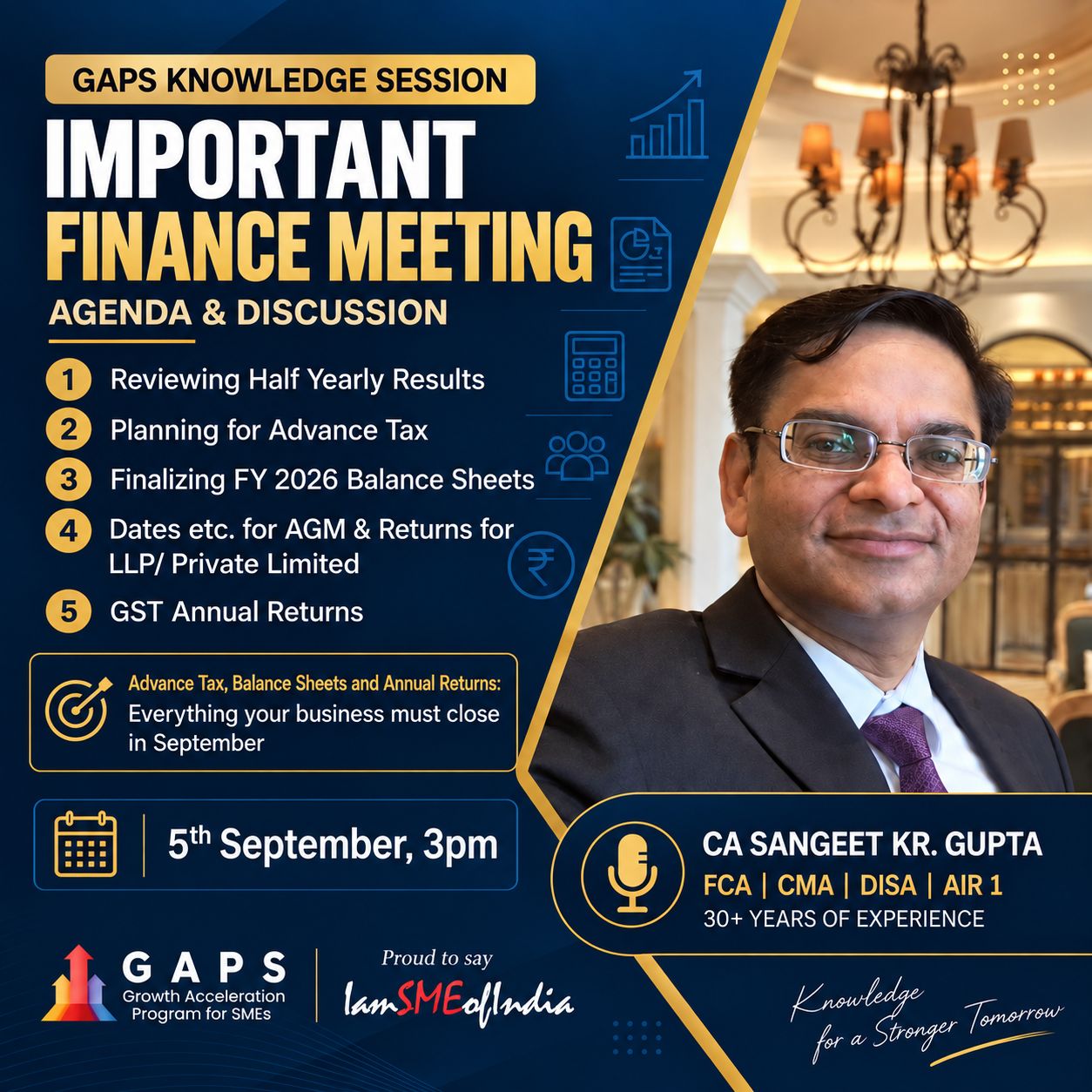
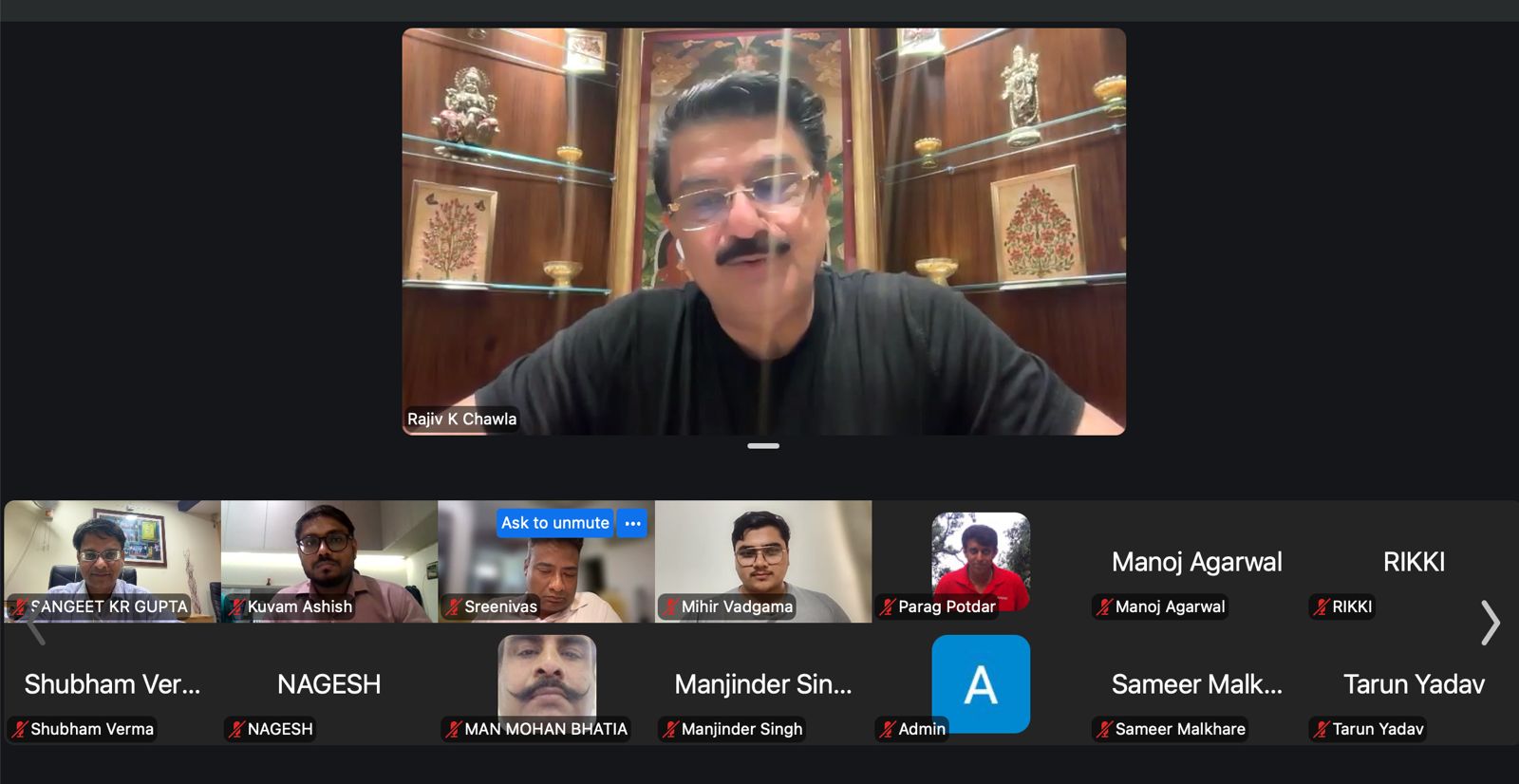
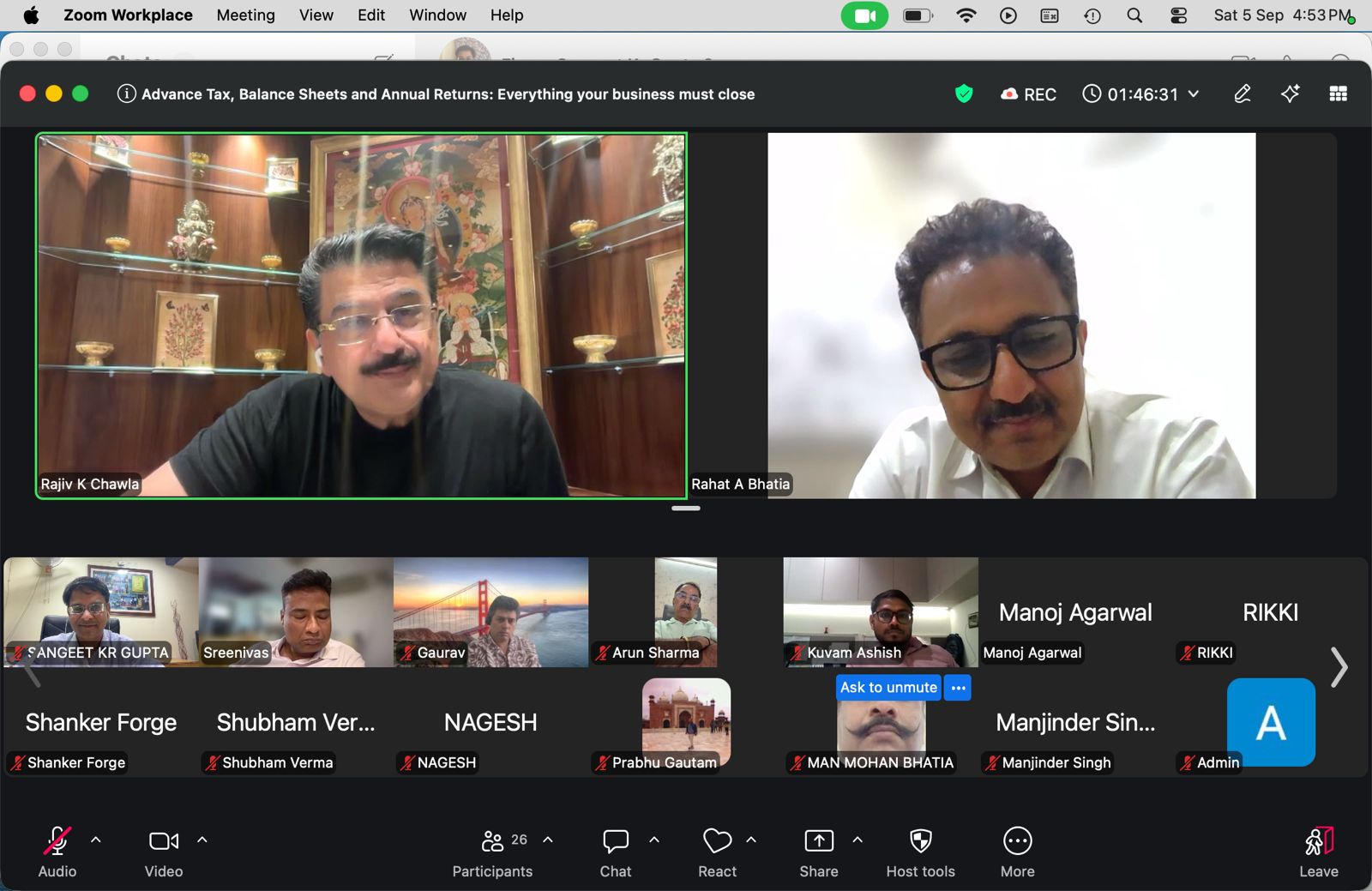
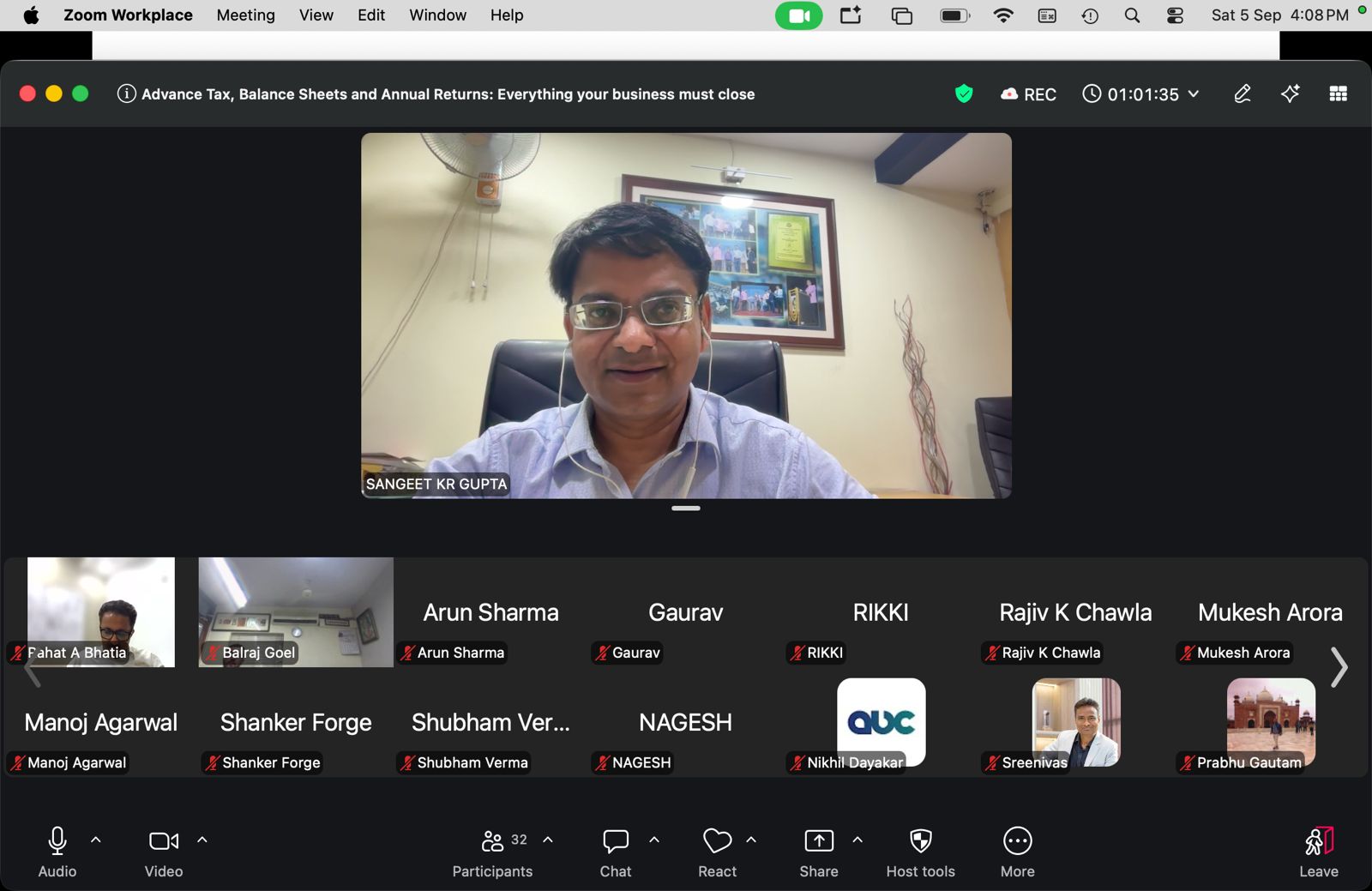
Webinar IamSMEofIndia…. Zoom Sangeet Gupta 5th Sept 2026

Webinar IamSMEofIndia…. Zoom Sangeet Gupta 5th Sept 2026

Practical Finance Meeting for MSMEs

Are you in control of your business numbers?

For many business owners, September is not just another month. It is the time to review the financial position of the business, estimate tax liability, prepare for statutory compliances, and take corrective action before the year-end rush begins.

The GAPS Knowledge Session: Finance Meeting, organised in collaboration with the Integrated Association of Micro, Small and Medium Enterprises of India, is designed as a practical working session for entrepreneurs, directors, partners and professionals.

This is not a routine lecture on accounting theory. It is an opportunity to review your own numbers, identify risks and understand what needs to be discussed with your CA, accountant or finance team.

What will be covered?

1. Advance tax planning

The September advance-tax instalment is an important checkpoint for every profitable business and individual with taxable income.

Participants will understand:

  • Who is required to pay advance tax.
  • How to estimate the full-year tax liability from half-yearly results.
  • How to adjust TDS and TCS already deducted or expected during the year.
  • How to calculate the September instalment.
  • How business profit, capital gains, interest income and other sources affect tax liability.
  • How underpayment can result in interest costs.

The normal instalment schedule requires cumulative payment of approximately 15% by 15 June, 45% by 15 September, 75% by 15 December and 100% by 15 March, subject to the applicable provisions and taxpayer category.

Participants will be shown practical methods to estimate advance tax for different situations, including a small MSME, an individual earning capital gains and a medium-sized company.

The objective is simple: do not wait until the return-filing season to discover that a large tax payment is payable.

2. Reviewing half-yearly numbers

A business owner should not look only at sales and bank balance. The real financial health of the business is visible through profitability, working capital, debt and cash-flow indicators.

The session will explain how to review:

  • Gross profit and net profit margins.
  • Current ratio and liquidity.
  • Debt-equity ratio.
  • Debtor turnover and receivable ageing.
  • Creditor turnover and payment patterns.
  • Debt-service coverage ratio.
  • Inventory movement.
  • Cash generated from business operations.

For example, if the net profit ratio was consistently 5% for the last five years but has fallen to 1% this year, the owner should investigate the reason. It may be due to reduced selling prices, higher raw-material costs, increased salaries, finance costs, abnormal expenses or incorrect accounting.

Similarly, if the debt-equity ratio has increased from 2:1 to 4:1 after new borrowings, the business should examine whether the loans were used for productive assets, working capital, personal withdrawals or to cover operating losses.

Ratios are not merely figures prepared for a bank or annual report. They are early-warning signals for the business owner.

3. AGM and annual ROC compliance

Companies must plan their Annual General Meeting well in advance. For most companies, the AGM for FY 2025–26 is required to be held by 30 September 2026, subject to applicable provisions and exceptions.

The session will cover practical questions such as:

  • Who is required to conduct an AGM?
  • Who prepares the AGM notice?
  • What is the appropriate notice period?
  • Can notice be sent by email, post or both?
  • When is shorter notice permitted?
  • Who should attend the AGM?
  • How should attendance be recorded?
  • What minutes and resolutions need to be maintained?
  • How should multiple companies sharing the same CA or professional team schedule their AGMs?

All companies cannot realistically hold their meetings at the same time on 30 September. Directors and professionals should therefore prepare a clear calendar, finalise the financial statements and schedule meetings in a practical sequence.

After the AGM, companies must also plan their ROC filings:

  • AOC-4: generally within 30 days of the AGM.
  • MGT-7 or MGT-7A: generally within 60 days of the AGM.

The session will help business owners understand that conducting the AGM is only one part of the process. Proper notices, attendance records, minutes, resolutions and post-AGM filings are equally important.


4. Registered-office compliance and MGT-7

MCA compliance is becoming increasingly data-driven and verification-oriented. Businesses should ensure that their registered-office details are accurate and consistent across MCA records, GST registration, bank records, invoices and other official documents.

The revised annual-return process has increased attention on registered-office information, including the need to keep a clear photograph of the premises and relevant location details ready where required by the form and portal.

The registered office should have:

  • A valid and complete address.
  • A visible company name board.
  • Proper records and documents.
  • Consistency with the address reported to MCA.
  • Evidence that the office is operational and accessible.

A company should not treat the registered office as merely a postal address. Incorrect, dormant or unverifiable premises can create serious compliance concerns.

5. LLP compliance and business structure

The session will also discuss important LLP compliances, including:

  • Form 8: Statement of Account and Solvency, generally due by 30 October.
  • Form 11: Annual Return, generally due by 30 May.
  • The difference between company and LLP compliance.
  • Situations in which an LLP may be suitable.
  • Situations in which a private limited company may be more appropriate.
  • Practical considerations relating to ownership, funding, liability, compliance cost and succession.

Choosing between a proprietorship, partnership, LLP and private limited company should not be based only on registration cost. The decision should consider taxation, liability protection, investment plans, governance, continuity and the future growth of the business.

6. GST annual return and e-way bill reconciliation

GSTR-9 preparation should not be postponed until the last month. The process becomes easier when the business starts reconciling its books and GST returns immediately after finalising the accounts.

Important reconciliations include:

  • Turnover as per books versus GSTR-1.
  • Turnover as per books versus GSTR-3B.
  • Input tax credit as per books versus GSTR-2B.
  • Credit notes and debit notes.
  • Reverse-charge transactions.
  • Exempt, nil-rated and non-GST supplies.
  • HSN-wise reporting.
  • State-wise turnover and tax liability.

The session will also highlight e-way bill controls. Businesses involved in movement of goods should ensure that no consignment moves without the required documentation. E-way bills should be reviewed regularly, ideally daily for high-volume businesses or at least monthly for smaller businesses.

A periodic reconciliation can identify cancelled, expired, duplicated or unused e-way bills and help prevent future queries.

7. Balance-sheet review before approval

Before signing off the financial statements, business owners should discuss key items with their finance team and CA:

  • Accrued professional, audit and legal fees.
  • Bonus, incentives, gratuity and leave encashment.
  • Depreciation and fixed-asset additions or disposals.
  • Physical verification of inventory and fixed assets.
  • Old computers, laptops and electronic waste.
  • Director remuneration and related-party transactions.
  • Director loans and debit balances.
  • Pending litigation and tax notices.
  • Bank reconciliation.
  • GST and TDS reconciliations.
  • Current-tax provision and applicable tax adjustments.

Unpaid director remuneration, personal expenses paid by the company, large withdrawals and non-moving loan balances should be reviewed and regularised wherever necessary.

8. ROC Amnesty and compliance clean-up

The Companies Compliance Facilitation Scheme, 2026, popularly referred to as the ROC Amnesty Scheme, provides an opportunity to regularise eligible delayed ROC filings at substantially reduced additional fees.

The latest reported deadline is 15 September 2026.

Eligible delayed filings may include forms such as AOC-4, MGT-7/MGT-7A, ADT-1, DIR-12, INC-22 and other applicable statutory forms, subject to the scheme conditions. The scheme has been described as providing a substantial waiver of additional fees for eligible filings.

Companies with old filing defaults should immediately:

  • Download the master data and filing history.
  • Identify all pending forms.
  • Check whether financial statements and annual returns are missing.
  • Verify director and registered-office details.
  • Prepare the forms and attachments.
  • File before the scheme deadline.

This may be a valuable last opportunity for companies to complete their compliance records before normal additional fees and enforcement measures resume.

Attend with your numbers

Participants are encouraged to keep the following information available during the session:

  • Sales and expenses for the first half of the year.
  • Estimated full-year profit.
  • TDS and TCS details.
  • Advance-tax payments.
  • Debtor and creditor ageing.
  • Loan balances and repayment schedules.
  • GST turnover and input-credit figures.
  • Pending ROC filings.
  • Registered-office details.
  • Details of related-party transactions.

The purpose of the meeting is to help you ask better questions, understand your own financial position and take timely action.

Good financial management is not simply about filing returns. It is about knowing where your business stands before making the next important decision.

Register or learn more through the webinar : MLG Associates webinar page

This content is for general awareness and should be read with the applicable law, notifications, circulars and facts of each business.


akhil goyal (5 Sep 2026, 4:33 PM)
thanks a lot sir
for elaborating

akhil goyal (5 Sep 2026, 4:34 PM)
ok sir, thanks.

RIKKI (5 Sep 2026, 4:35 PM)
YES SIR

akhil goyal (5 Sep 2026, 4:39 PM)
ok

You (5 Sep 2026, 4:42 PM)
https://mlgassociates.in/section-80jjaa-tax-benefits-must-avail-in-new-regime-also 
Use this

Shubham Verma (5 Sep 2026, 4:59 PM)
https://gapsindia.com/

Tarun Yadav (5 Sep 2026, 5:12 PM)
Great session sir

MAN MOHAN BHATIA (5 Sep 2026, 5:12 PM)
VERY VERY GOOD

Mihir Vadgama (5 Sep 2026, 5:14 PM)
Very informative , thank you sangeet Gupta sir.    Great session sir

WordPress Image Lightbox