Cost Audit is Mandatory for Auto Component Manufacturers if Turnover Exceeds Rs 100 Crores

Category Archives: Recent News

Cost Audit is Mandatory for Auto Component Manufacturers if Turnover Exceeds Rs 100 Crores

Do you know, that Cost Audit is Mandatory for Auto Component Manufacturers

if Turnover Exceeds Rs 100 Crores

Auto component manufacturers in India often focus on production efficiency, OEM schedules, supply chain stability, GST, working capital, and pricing discipline. Yet one important compliance area is still misunderstood in many manufacturing businesses: whether maintenance of cost records and cost audit are mandatory under Section 148 of the Companies Act, 2013.

For businesses engaged in the manufacture of auto parts and automotive components, the issue becomes especially relevant where products fall within the notified sectors covered by the Companies (Cost Records and Audit) Rules, 2014. Various professional references discussing automotive components and Chapter 87 indicate that this sector can be covered for cost audit applicability, subject to the prescribed turnover criteria and the exact product classification.

In practical terms, the broad compliance position for a non-regulated sector company is this: if the company is covered under Rule 3, and its overall annual turnover from all products and services is Rs 100 crore or more, and the aggregate turnover of the specific product or products for which cost records are required to be maintained is Rs 35 crore or more during the immediately preceding financial year, cost audit becomes mandatory.

This is why many auto component manufacturers cannot evaluate applicability only by looking at one HSN code in isolation. The correct approach is to examine the nature of the goods, the notified product coverage, the sector classification under the Rules, the immediately preceding year turnover, and whether any exemption is available.

Why auto component manufacturers need to pay attention

The automotive supply chain is deep and diverse. It includes manufacturers of parts, assemblies, precision components, fabrication items, electrical components, chassis-linked parts, body-related items, and many other products supplied to OEMs, tier-1 vendors, exporters, and replacement markets. When such products fall within the classes of goods covered under the cost records framework, the company may be required first to maintain cost records and then, if turnover thresholds are crossed, to get those records audited.

This distinction is very important. Cost records and cost audit are connected, but they are not identical. A company may be required to maintain cost records once the Rule 3 threshold conditions are met, while cost audit under Rule 4 applies only when the higher turnover thresholds are also satisfied.

For manufacturers in the auto component segment, this means compliance should begin well before the year-end audit stage. Once the company enters the threshold zone, management should ensure that product-wise cost data, material consumption, utilities, labour, overhead absorption, captive consumption, inter-unit transfers, inventory valuation logic, and reconciliation with financial books are all properly documented.

Section 148 of the Companies Act, 2013 empowers the Central Government to require specified classes of companies to maintain cost records and, where applicable, to conduct cost audit. The operational framework is laid down in the Companies (Cost Records and Audit) Rules, 2014.

Professional summaries of Rule 4 explain that cost audit applies where the company falls under the notified Table A or Table B categories and satisfies the relevant turnover thresholds. For companies in non-regulated sectors, the key threshold is overall annual turnover of Rs 100 crore or more, together with aggregate turnover of Rs 35 crore or more for the individual product or service for which cost records are required.

This is the basis for the statement that cost audit is mandatory for an auto component manufacturer when turnover exceeds Rs 100 crore, but with one important qualification: the business must also be engaged in a covered product category and satisfy the product-level turnover threshold. Saying only “above Rs 100 crore” is directionally useful for business communication, but the precise legal test includes both overall turnover and covered product turnover.

Relevance of Chapter 87 and automotive components

A number of industry and professional references discussing cost audit applicability specifically mention motor vehicles and automotive components in connection with Chapter 84, 85 and 87. These references indicate that automotive components have historically been discussed within the cost audit coverage framework, although present-day applicability should always be cross-checked with the current Rules, amendments, and exact product classification.

This matters because many manufacturers assume that only vehicle assemblers or very large OEMs are exposed to cost audit. That assumption is risky. In reality, component manufacturers can also come within the compliance net where their products fall under the notified coverage and their turnover crosses the prescribed thresholds.

Therefore, any company manufacturing auto parts, sub-assemblies, precision items, fabricated components, or allied automotive products should perform a structured applicability review rather than relying on assumptions based on industry practice.

Thresholds every manufacturer should know

For cost records, the general trigger under Rule 3 is overall turnover of Rs 35 crore or more in the immediately preceding financial year for companies engaged in covered goods or services. This means the obligation to maintain cost records can arise much earlier than the stage at which cost audit becomes mandatory.

For cost audit under Rule 4, the thresholds differ by sector. In Table A sectors, the threshold is overall turnover of Rs 50 crore or more and product/service turnover of Rs 25 crore or more. In Table B sectors, the threshold is overall turnover of Rs 100 crore or more and product/service turnover of Rs 35 crore or more.

As a result, an auto component manufacturer with overall turnover above Rs 100 crore should not stop at the headline figure alone. Management must also check whether the turnover of the covered auto component line is at least Rs 35 crore and whether the company falls within the applicable notified category.

Important exemptions

Even where a company is covered under Rule 3, the requirement for cost audit may not apply in certain cases. Professional explanations of the Rules note exemptions where export revenue in foreign exchange exceeds 75 percent of total revenue, or where the company operates from a Special Economic Zone.

These exemptions are important for auto component manufacturers with large export exposure. However, the exemption should be evaluated carefully on facts and documented properly, because a mistaken assumption can create avoidable compliance risk for directors and management

Common compliance mistakes

One common mistake is checking only company turnover and ignoring the turnover of the specific covered product line. Another is assuming that ERP data automatically meets cost record requirements, even when cost sheets, reconciliation notes, utility allocation logic, and quantitative records are incomplete.

A third mistake is waiting until the end of the year to assess applicability. Since cost audit depends on proper maintenance of records through the year, delayed action often leads to weak data trails, reconciliation gaps, and unnecessary stress during audit and reporting.

How MLG Associates can help

At MLG Associates, we help manufacturing businesses evaluate whether cost records and cost audit provisions apply based on the nature of products, turnover profile, and sector classification. We also support businesses in reviewing product mapping, compliance readiness, documentation standards, and practical coordination between finance, costing, production, and ERP teams.

For auto component manufacturers, an early applicability review can prevent both over-compliance and under-compliance. The right review identifies whether the business falls within the notified framework, whether thresholds are crossed, what records must be maintained, and what actions are required for timely compliance.

A careful compliance review is particularly valuable for companies scaling beyond Rs 100 crore turnover, diversifying product lines, supplying to OEMs, or expanding exports. In all such cases, the cost audit question should be examined proactively rather than after receipt of a notice or during statutory reporting.

Applicability of Cost Audit – Motor Vehicles (including Automotive Components) Industry

  • Cost Audit is applicable to:
    • Companies engaged in manufacturing, production or processing of goods or services.
    • Both Private Limited & Public Limited Companies are covered.
  • These Companies are covered under Cost Audit if any of the following criteria is fulfilled:
    • Company Listed on Stock Exchange, or
    • Turnover of the company exceeds Rs. 100 crores

  • Cost Audit is mandatory for the financial year 2012-13 and onwards.

(If a company is covered once on the basis of above criteria, the Cost Audit will remain mandatory even if turnover of the company is reduced in the subsequent years)

  • Companies whose Cost Audit Orders were issued on case to case basis as per earlier Rules, shall continue to be covered under Cost Audit whether they fulfill the above criteria or not.

  • Relevant Chapter Heading of the Central Excise Tariff Act, 1985 in respect of Motor Vehicles (including Automotive Components Industry

Chapter 84, 85 & 87

Cost Accounting Records:

  • Cost Accounting Records are to be maintained as per The Companies (Cost Accounting Records) Rules, 2011, and
  • Cost Accounting Standards issued by the Institute of Cost Accountants of India.

(Presently CAS 1-18 have been issued)

  • Cost Accounting Records are required to be maintained for atleast 8 financial years.

Cost Audit Report:

  • It is to be prepared on the basis of Cost Audit Report Rules, 2011

Submission of Cost Audit Report:

  • It is to be submitted online to Ministry of Corporate Affairs.
  • If Company is following April to March financial year, then the Cost Audit Report for the Financial year 2013-14 is required to be submitted by 27th September, 2014 (i.e., 180 days from the close of financial year)

Source : https://costaccountant.in/applicability-of-cost-audit-to-auto-auto-components/

#tags : Cost Audit, Auto Components, Auto Component Manufacturers, Section 148, Companies Act 2013, Cost Records, CRA-1, CRA-2, CRA-4, Chapter 87, Turnover 100 Crores, Manufacturing Compliance, Cost Accountant, MCA Compliance, Cost Audit Applicability, MLG Associates

Advance Tax – First Instalment. ( Due date is 15th June 2026 )

Tax ALERT


This is normal yearly Quarterly SoP. Nothing new. But sending this reminder only for “ready” reference.

We all know that we must pay advance tax before the financial year ends in 4 instalments: 15th June, 15th September, 15th December and 15th March.

This is not applicable if your Tax due is nil, of Tax due is less than the TDS already deducted by your customers etc.

Points to remember
  1. Estimated ? Yes.  make your best estimate .
  2. How much ? This is 15% of the Annual Tax payable by 15th June for FY 2026-27
  3. This is not applicable if your Tax due is nil, (example due to any loss )
  4. Similarly, if your Tax due is less than the TDS already deducted by your customers etc. then, again Advance tax is not required
  5. What will happen if you don’t pay in time ? Govt will charge a bit of interest… this is approx 1% p.a. ( for a block of 3 months, in 1 go)
  6. How to pay ? Online only
  7. Site name = either your Bank account will have a link, or Official sites are : https://incometaxindia.gov.in/ and https://incometaxindia.gov.in/Pages/tax-services/pay-tax-online.aspx

Benefits of Paying Advance Tax
1. Avoidance of interest and penalty charges
2. Better cash flow management
3. Avoidance of last-minute rush and stress
4. Avoidance of default notice by the tax department

SO
PLS AVOID LAST DATE. and pay in time, as per normal annual SOP.

GSTN Advisory 661: New E-Way Bill Rules Effective June 15, 2026 ( now dt extended to 1-8-26)

 New E-Way Bill Rules Effective June 15, 2026 …. ( now planned dt extended to 1-8-26)

The Goods and Services Tax Network (GSTN) recently issued Advisory No. 661. This update introduces major functional upgrades to the e-Way Bill (EWB) portal. These technical adjustments will officially go live in production on June 15th, 2026. // ( now dt extended to 1-8-26)

Consequently, the tax authorities aim to eliminate manual reporting loopholes and maximize physical shipment traceability. For Chartered Accountants, Chief Financial Officers, and corporate finance teams, this transition demands immediate system adjustments.

If your dispatch clerks or ERP masters use outdated details, your cargo could face systemic transit blocks. Therefore, understanding these two structural portal updates is vital for your week-ahead compliance planning.

1. Mandatory Reporting of “Ship-To GSTIN”

In multi-party domestic trade, companies heavily rely on the Bill-To/Ship-To distribution model. Typically, a supplier bills a buyer in one state but delivers the actual goods to a third-party warehouse or client site elsewhere. Previously, the portal allowed significant data entry flexibility for these transactions.

What Changes on June 15?

  • Mandatory Field Capture: The “Ship-To GSTIN” data field becomes completely mandatory during the e-Way Bill generation workflow.

  • Unregistered Delivery Locations: If you ship goods directly to an unregistered person or end consumer, you cannot leave this field blank. Instead, you must explicitly type “URP” (Unregistered Person) into the field.

Ultimately, this update enables the tax department to cross-verify physical transit routes against your electronic invoices and monthly GSTR-1 filings. If the delivery address does not align perfectly with the designated invoice recipient, the system may flag the transaction for physical inspection under Section 129 of the CGST Act.

2. The New “Voluntary E-Way Bill Closure” Facility

Beyond stricter data fields, GSTN is launching a brand-new transaction closure feature. Previously, e-way bills remained legally “open” on the common server even after a truck successfully unloaded its cargo. Now, stakeholders can formally close the delivery loop.

Who is Authorized to Close the Bill?

To ensure maximum flexibility on the ground, four specific users can execute a portal-based closure:

  1. The Supplier who initiated the shipment.

  2. The Recipient who accepted the delivery.

  3. The Transporter managing the logistical movement.

  4. The Driver or an authorized individual on the road.

Strict Timeline Restrictions

You must act quickly if you choose to use this feature. The system strictly limits voluntary closures to the same day of physical delivery or the immediately succeeding calendar day. Once that specific window shuts, retrospective database modifications are completely blocked.

Furthermore, field personnel can handle closures directly via mobile verification. By typing a registered mobile number, the driver receives a one-time password (OTP), views all active shipments assigned to their phone, and signs off on the delivery.

June Compliance Checklist for Corporate Accountants

1.Verify Vendor and Client Masters:Action: Complete Before June 12.

Review your ERP customer database. Ensure that distinct delivery locations have a valid GSTIN attached so your dispatch team avoids portal errors on June 15.

2.Update ERP and API Integrations:Action: Sandbox Phase.

Coordinate directly with your Tally, SAP, or GSP software providers. Ensure they have tested the new API updates in the NIC sandbox environment.

3.Train Warehouse and Fleet Staff: Action: Operational Launch.

Educate your billing clerks on entering “URP” for unregistered clients. Simultaneously, train your logistics managers on the mobile OTP closure system.

Need Expert Advisory for Your Business?

The sudden implementation of GSTN Advisory 661 proves that tax enforcement is moving toward real-time digital verification.

At MLG Associates, we specialize in managing corporate tax structures, upgrading ERP systems for automated compliance, and resolving complex trade finance audit issues.

MLG Associates

Useful GST Links :  https://services.gst.gov.in/services/advisoryandreleases/read/661

Reach out to our indirect tax desk today to secure your supply chain before the June 15 deadline.

Accounting Treatment of Letters of Credit (LC) for Domestic Purchases in India

Accounting Treatment of Letters of Credit (LC) for Domestic Purchases in India

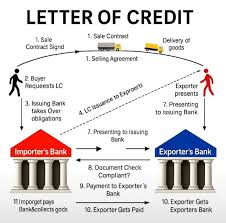
Letters of Credit (LCs) are widely used by Indian businesses to provide comfort to suppliers that their payments will be honoured on time, especially where the ticket size is large or the credit period is long. An LC is essentially a bank’s undertaking to pay the seller, subject to fulfilment of specified conditions, typically linked to supply of goods or services and submission of agreed documents. For domestic purchases within India, LCs are increasingly common in sectors such as steel, chemicals, bulk pharma, engineering goods and large project supplies.

Wiki : https://en.wikipedia.org/wiki/Letter_of_credit 

From an accounting perspective, many finance teams are unsure whether the LC itself should be recognised as a liability, or whether the usual trade creditor treatment is sufficient. The confusion is greater in the case of usance LCs, where payment is made after a deferred period such as 30, 60 or 90 days. In practice, the LC is usually a payment mechanism and a risk‑mitigation tool, while the underlying liability continues to be the normal trade payable to the supplier. The key is to align your entries with the substance of the transaction while also meeting disclosure requirements on contingent liabilities and commitments.

Business scenario: Domestic LC for deferred payment

Consider a common scenario: a company purchases goods worth Rs 1 crore from a domestic Indian vendor, on terms that payment will be made 90 days after receipt of goods against a usance LC. The vendor wants comfort that the payment will be made on due date and therefore insists on an LC from the buyer’s bank. The buyer’s bank issues the LC in favour of the vendor, assuring payment on presentation of compliant documents after the 90‑day period. For the buyer, this arrangement is similar to obtaining short‑term supplier finance from the banking system, supported by the LC limit sanctioned by its bank.

From the buyer’s accounting point of view, there are three distinct elements in this transaction: recognition of purchase and inventory, recognition and clearance of trade payables to the vendor, and accounting for bank‑related items such as LC commission, margin money and any interest or charges on the deferred payment. If the accounting policy is not documented and communicated clearly, you may see inconsistent practices across branches or units, leading to reconciliation issues and avoidable audit qualifications. A clear policy backed by robust ERP configuration removes these pain points and improves reliability of financial reporting.

Option 1: LC as a payment mechanism, vendor as the main liability

Under this approach, the company records the purchase and trade payable in the usual manner when the goods are received or the vendor invoice is approved. The LC is treated purely as a payment mechanism and a bank commitment; it does not replace the vendor liability in the books. The vendor continues to appear as a creditor until the bank actually makes payment under the LC and the buyer’s bank account (or LC settlement account) is debited. Only bank charges, LC commission and any margin money are separately accounted for as expenses or assets, as the case may be.

This approach is conceptually clean and consistent with the principle that liabilities arise from obligations to suppliers, not from the existence of an LC facility. It also aligns well with the framework on provisions and contingent liabilities, which requires that contingent items generally be disclosed in the notes rather than recognised as separate liabilities. Since the vendor account remains active until payment, creditor ageing reports, vendor reconciliations and trade payables disclosures remain straightforward and transparent. For most domestic LC‑backed purchases, this is a robust and widely accepted method.

Option 2: Using an LC control account for internal tracking

Some entities prefer to introduce an LC control account in the general ledger to monitor limits and utilisation more closely. In this method, the underlying accounting recognition stays the same (purchase and trade payable on goods receipt), but an internal account such as “LC Control Account” or “LC Payable – Bank XYZ” is used for tracking. For example, at the time an LC is opened, the finance team may pass a transfer entry between the vendor and LC control ledgers for internal MIS, and reverse or adjust it at the time of settlement. The objective is not to change the nature of the liability, but to improve visibility of the LC‑backed payables.

The benefit of this approach is that treasury and finance teams can generate more granular reports: how much of the LC limit is utilised, what is the maturity profile of LCs, and which vendors are backed by which banks. This is particularly useful in large groups managing multiple LC facilities across several banks. However, if not carefully designed, there is a risk that the LC control entries may be misunderstood as creating or extinguishing liabilities, leading to duplication or understatement of trade payables. Clear documentation of journal logic and periodic reconciliation between vendor ledgers and LC control accounts are essential safeguards.

Option 3: LC disclosed as contingent liability or commitment

A third angle to consider is not so much about the journal entries, but about disclosure in the financial statements. Since an LC represents a bank’s contingent obligation to pay, backed by the buyer’s promise to reimburse the bank, it is often disclosed as a contingent liability or commitment in the notes to accounts until it is drawn or settled. Under the Indian accounting framework aligned with Ind AS 37 and similar guidance, contingent liabilities are generally not recognised on the face of the balance sheet but may be disclosed to provide users with information about possible obligations and commitments.

For a domestic LC where the underlying purchase and trade payable have already been recognised, the LC may be shown as part of the company’s banking facilities, guarantees and commitments. This improves transparency for lenders, investors and other stakeholders, giving them a better picture of off‑balance sheet exposures and banking arrangements. The flip side is that if these disclosures and internal registers are not maintained carefully, management may underestimate the cumulative impact of LCs on liquidity planning, interest costs and bank covenant compliance. A disciplined note‑disclosure process, supported by a regularly updated LC register, addresses this concern effectively.

Choosing the right approach for your organisation

For most Indian businesses using LCs to support domestic purchases with a fixed credit period, treating the LC as a payment mechanism (Option 1) while maintaining a separate LC register and appropriate disclosures (Option 3) offers a good balance between simplicity and transparency. Larger or more complex organisations may additionally adopt an LC control account structure (Option 2) to achieve better internal monitoring of limits, maturities and bank‑wise exposure. The right choice depends on your scale, complexity of banking arrangements, ERP capabilities and reporting requirements from lenders or investors.

At MLG Associates, we help clients design and implement practical accounting policies for trade finance instruments such as letters of credit, bank guarantees and buyer’s credit. This typically includes mapping the entire LC life cycle in the ERP, defining standard journal entries for each stage, documenting policies on classification and disclosure, and training internal teams so that the process runs smoothly across locations. With the right structure, LCs can become a powerful tool to manage working capital and supplier relationships, without creating confusion or inconsistency in your books of account.


Suggested reference links for the bottom of your page:

  1. ClearTax – “Letters of Credit – Definition, Types and Process” – https://cleartax.in/s/letters-of-creditcleartax

  2. Buyers Credit Accounting Entries – https://buyerscredit.in/2011/10/19/accounting-finance/buyerscredit

  3. GKToday – “Usance Letter of Credit” – https://www.gktoday.in/usance-letter-of-credit/gktoday

  4. Ind AS 37 summary – MYND Glossary – https://www.myndsolution.com/glossary/ind-as-37/myndsolution

  5. IFRS – IAS 37 Provisions, Contingent Liabilities and Contingent Assets – https://www.ifrs.org/issued-standards/list-of-standards/ias-37-provisions-contingent-liabilities-and-contingent-assets/ifrs

Auditor for companies using SAP in Accounts

Auditor for Companies Using SAP in Accounts

Companies using SAP for accounting often assume that strong software automatically ensures strong controls.

In practice, that is only partly true. SAP is a powerful ERP platform, but the quality of financial reporting, compliance, approval discipline, master data control, and transaction accuracy still depends on process design, user discipline, review mechanisms, and audit oversight. An experienced auditor for SAP-based companies does not only verify ledger balances and supporting documents; the auditor also evaluates how the system is configured, how transactions flow, where control points exist, and whether the accounting output can be relied upon for management, statutory, and tax purposes.

At MLG Associates, we understand that audit in an SAP environment needs both accounting knowledge and system understanding. A company may be posting thousands of transactions through automated or semi-automated processes across purchase, sales, inventory, fixed assets, banking, taxation, and MIS. When accounts are maintained in SAP, an auditor must review not just the final books, but also the underlying logic of document flow, authorizations, approval trails, reconciliation structure, and exception handling. MLG Associates already positions itself around statutory audit, internal audit, systems-related work, audit and assurance, and accounting support, making this page naturally aligned with the firm’s existing service profile.

Why SAP companies need a specialist auditor

In a traditional accounting setup, many controls are manual and visible on paper. In SAP, a large part of the control environment is embedded within the software. That means errors may not always arise from wrong accounting entries alone; they may arise from wrong masters, incorrect mappings, weak approval matrices, incomplete reconciliations, posting to wrong cost centers, bypassed workflows, or users having excessive access rights. A specialist auditor helps identify these issues before they become reporting, compliance, or fraud problems.

SAP-driven businesses also face greater complexity because data often flows across departments. For example, a purchase entry may affect inventory, GRN, vendor balances, input tax, cost centers, and payment planning. A sales transaction may affect receivables, revenue recognition, output tax, inventory movement, profitability reporting, and debtor ageing at the same time. Because one transaction touches multiple reporting areas, an auditor must review the entire process chain instead of checking vouchers in isolation.

Scope of audit in an SAP accounting environment

Audit of a company using SAP in accounts typically covers both financial accuracy and process reliability. This may include review of general ledger controls, vendor and customer reconciliations, bank reconciliations, GST and TDS linkages, fixed asset accounting, stock-related entries, provisions, month-end closing controls, and management review procedures. It may also include checking whether reports generated from SAP are consistent with books of account and whether manual journal entries are properly authorized and documented.

A deeper SAP-oriented audit also looks at system controls. These may include user access rights, maker-checker implementation, segregation of duties, document numbering, master creation controls, change logs, approval workflows, tolerance limits, payment controls, and exception reports. Where businesses rely heavily on ERP-generated reports for compliance and decision-making, these areas become highly important because weak controls inside the system can undermine otherwise clean-looking financial statements.

What MLG Associates can bring

MLG Associates describes itself as having long-standing audit and assurance experience, internal audit capabilities, systems-related coverage, and accounting outsourcing exposure, while also identifying ERP and IT matters as a dedicated management contact area. That combination is useful for SAP-based companies because effective audit in such organizations usually requires a practical blend of accounting, compliance, process review, and ERP understanding.

Our approach for SAP-using companies can include:

  • Review of accounting controls embedded in ERP processes.

  • Verification of key reconciliations between sub-ledgers and the general ledger.

  • Review of GST, TDS, vendor, customer, and bank process discipline.

  • Testing of approval workflows and maker-checker controls.

  • Review of user access and role-based control structure.

  • Examination of manual override entries and unusual journals.

  • Support in identifying process gaps before statutory or management reporting issues grow.

This is especially useful for growing companies where SAP has been implemented, but process discipline is still evolving. It is equally relevant for established companies that want stronger internal audit, cleaner month-end closures, better documentation, and more reliable financial reporting.

Typical issues seen in SAP-based accounts audits

In many ERP-driven companies, the books may technically close on time, but the underlying control quality may still be weak. Common issues include unreconciled vendor advances, aging mismatches, open GR/IR items, incorrect tax mappings, duplicate vendor masters, inactive approval controls, inconsistent cost center usage, and overdependence on a few key users who understand the system. These issues do not always appear immediately in trial balance review, but they become visible when audit is performed with both financial and process awareness.

Another common problem is excessive confidence in system reports without adequate validation. Management may assume that because a report comes from SAP, it must be correct. However, if master data, configuration, user discipline, or cut-off practices are weak, even a system-generated report can produce misleading output. A strong auditor helps management separate “system-generated” from “system-reliable.”

Suitable for which companies

This service is relevant for manufacturing companies, trading companies, project-oriented entities, distribution businesses, and multi-location organizations where accounting is run through SAP or SAP-like ERP structures. It is particularly valuable for companies that need statutory audit readiness, stronger internal audit, cleaner controls over accounting teams, or more confidence in ERP-based reporting for promoters, management, bankers, and investors.

It is also useful when a company has recently migrated to SAP, expanded into multiple branches, or experienced growth in transaction volume without proportional strengthening of finance controls. In such situations, an auditor with practical knowledge of accounting processes and ERP-linked controls can add value far beyond routine balance verification.

Why clients may consider MLG Associates

MLG Associates states that it serves corporate clients across sectors, offers audit and assurance, internal audit, systems audits, taxation, and outsourced accounting support, and operates from Faridabad with broader NCR and pan-India reach. The firm also highlights a sizeable professional team and identifies a dedicated ERP and IT contact, which supports credibility for engagements where audit intersects with accounting systems and ERP processes.

For companies using SAP in accounts, this means they can engage a firm that understands both books and business processes. The benefit is not just completion of audit work, but practical observations on controls, reconciliations, reporting quality, compliance linkages, and opportunities to strengthen finance operations.

Contact :

If your company uses SAP in accounting and you need support for internal audit, systems review, statutory audit readiness, process checking, or stronger financial control review, MLG Associates can assist from its Faridabad office and broader NCR base. The site lists enquiry contacts, office details at Crown Plaza Mall, Sector 15A, Faridabad, phone numbers including +91-9312608426 and +91-9311278884, and the email info@mlgassociates.org.

contact us

WordPress Image Lightbox