Alert on MSME payments 2026- 43B(h) -Income Tax – last few days left

Category Archives: Recent News

Alert on MSME payments 2026- 43B(h) -Income Tax – last few days left

Feb to April are the months to clear the 43B(h) MSME payments…

As in last 2 years…… Be Alert …and do the needful

This article has Some ideas and Tips in MSME 43B(h) – for Tax audit, for Balance Sheet for Advance tax and for Income Tax

Alert dated 25th April-2026 at — 1 pm,


Current Status of 43B(h)- for FY 25-26


The LAW = Same as last year… There is no Change … as such… but now MSME Limit is now Rs 100 Crores… hence, more and more of your suppliers are now covered in MSME benefit scheme.


Section 43B(h): MSME ~ 45 Days Payment Rule.

This  provision mandates that payments for goods or services provided by MSEs must be settled within 45 days from the date of acceptance.

risk If businesses fail to meet this deadline, they will be at a risk to claim these payments as tax deductions.

  1. So. Yes the Law is Real
  2. Yes, unpaid MSME dues will be DISALLOWED
  3. AND YOU WILL HAVE TO PAY TAX AT FULL RATE.. SAY 26% OR 34%
  4. Yes, there was no relief
  5. There was no amendment
  6. Yes, 2024 and 2025 Income tax returns also went this way
  7. Yes, MSME usually got a lot of payments from their customers this way
  8. Yes, many companies had to pay steep taxes due to this section.
  9. Nobody can save your company from accidental tax later .. if Govt “catches you” later on.

  10. Have you made your Financial Budget to pay all eligible MSME vendor’s : Arrange Funds as soon as possible. Keep Buffer for new creditors, new invoices of upto 31st March 2026 also.


so, for all the Corporate Accountants, and Corporate Auditors, and MSME businessmen, both as receiver of funds and payer of funds, Get Ready for that time of the year…

  1. Hope you have completed the work ?
  2. Hope the vendor identification had been done ?
  3. Hope your team had checkd Vendor MSME status on the Govt website ( that is the only evidence ), or on their invoices … keep that screenshot or PDF

  1. Usually, all MSME vendors bills of 29-2-2025, already paid by 31st March or maximum, 15th April 2025…..
  2. MSME vendors Bills upto 15th March 2026 are also paid between 20th and 30th April 2026.. 

  3. MSME vendors Bills upto 31st March 2026  are also paid between  30th April and 10th May 2026. (Just to be safe)…

  4. See this yourself.
  5. Also remember to clear all the MSME dues…
  6. Short cut :Vigilance point
  7. SOP for future
  8. 5th March by 5th April ( start the process by 30th day.. so that you are safe bye 45th day )
    10th March by 10 April
    15th March by 15th April
    20th Mar. by 20th April
    25th Mar by 25th April
    31st March… by 30th April( I have kept a Buffer )
  9. If you are an MSME … you might have been benefited from this in the March payment wave, So, similarly, the WAVE continues
  10. This is a benefit Govt is giving to MSME’s and if you are a MSME take this benefit from your customers….

  11. Almost 4 Crores MSME are already registered and are claiming this benefit… are you taking this Benefit ???

Sent letters to all creditors ? Kept evidence ? Two rounds of emails is a must evidence. ?

Do you have letters or MOU with each MSME vendor, … with overriding clause for 45 days, irrespective of the PO’s and Invoices. ( get the format in the Google drive link below )

turnover sales


Three year MSME category Rule notification dt 18-10-2022.. Change of category upwards… you can take the benefit of previous classification for three long years. Yes you can. ( see notification in the Google drive link below )

  1. Cheque Hand over   ( Cheque in Transit ?)……….? This idea can work only if you have 100% clear balance in your bank account… Else… It will not be acceptable. 

  2. Money is coming automatically to most MSME’s .. every day… Congratulations, if you are the beneficiary too.

  3. Hope the PSU’s also start paying in the same way. The PSU chief will be shocked with huge tax if he does not organise the payments to all the MSME vendors in time… this will create a new culture.

Google Drive link for the Powerpoint presentation , Copies of Letters, Emails, MOU.. as discussed in the Session by Mr Sangeet Kr Gupta. in the last Zoom seminar

MOU copy inside


43B(h) benefit ? 43B(h) action ? 43B(h) what to do ? 43B(h) safety ? 43B(h) annexure ? 43B(h) when to follow ? 43B(h)penalty? 43B(h)areyousafe?

How to check MSME reports in your ERP ? Example Finsys ERP ?

How to do this in Finsys ? Very simple… Just ask the accounts to take out the Vendor Outstanding report.. in Future date… say 1st May 2026… and see what will come as overdue on that date… all those invoices are fit to start processing.. so that you are safe.. by 1st May and so on….

Team at your service.. Contact us page

FBAR Return.. for USA.. filing from India, for NRI, PIO

Understanding FBAR: Essential Compliance for US Persons with Foreign Accounts

In today’s globalized world, managing finances across borders is common, especially for US citizens and residents with ties to India.

The FBAR (Report of Foreign Bank and Financial Accounts) is a critical US reporting requirement that helps prevent money laundering and tax evasion. Administered by the Financial Crimes Enforcement Network (FinCEN), it’s filed as FinCEN Form 114—not with the IRS directly

Failure to comply can lead to severe penalties, making awareness vital for Indians, NRIs, PIOs, and returning seniors.investmates+1

What is FBAR?

FBAR requires US persons to disclose foreign financial accounts exceeding a $10,000 aggregate threshold at any point in the calendar year. This includes bank accounts, brokerage accounts, mutual funds, trusts, and other financial assets held outside the US.irs+1

Key Details:

  • US Persons Defined: US citizens, green card holders, and tax residents (via substantial presence test: 31 days current year + 183 days over 3 years).getbelong+1

  • Accounts Covered: NRE/NRO accounts in India (SBI, ICICI), foreign stocks, pensions—even joint or signature authority accounts.goinri+1

  • Threshold: Aggregate max value > $10,000 anytime; use Treasury year-end rates for USD conversion.wise+1

  • No Income Tax Link: FBAR reports existence/balances only; income is reported separately on Form 1040.[1040abroad]​

Unlike Form 8938 (FATCA), FBAR has a lower threshold and covers more account types. Filing is annual, regardless of tax owed.investmates+1

Relevance for Indians and People of Indian Origin (PIOs)

Many US-based Indians maintain NRI accounts in India for family support, investments, or retirement. US citizenship or green card status triggers FBAR if balances hit $10,000—common for NRE savings, FDs, or rentals in NRO accounts.economictimes+2

Why It Matters:

  • NRIs/H1B/L1 Holders: Substantial presence makes you a “US person.” Even tax-free NRE interest under US-India treaty must be reported.neuronwealth+1

  • Joint Accounts: Full value reported individually; non-US spouse doesn’t file.[investmates]​

  • Investments: Indian mutual funds, PPF (debated but often reportable), property sale proceeds.reddit+1

  • Penalties Risk: Non-willful: up to $16,536 per report (2026 adjusted); willful: greater of $165,353 or 50% balance per account/year—devastating for multi-year lapses.taxesforexpats+2

US PIOs naturalized in the US must report lifelong, even post-retirement planning.dineshaarjav+1

Special Note for Senior Citizens Returning from USA to India

Retiring NRIs relinquishing green cards or failing substantial presence often overlook past FBAR obligations. You must file for all years as a US person, even after returning.bcajonline+2

Common Scenarios:

  • Green Card Surrender: File up to surrender date; use Streamlined Procedures for delinquents (5% penalty domestic, 0% if expat).

  • Pensions/Rentals: Ongoing NRO income requires reporting until status changes.

  • Pitfalls: EB-5 investors or H1B retirees with $50k+ in India face audits; willful blindness (e.g., ignoring CPA advice) ups penalties.

Returning seniors risk account freezes or immigration issues. Proactive compliance preserves wealth transfer to India.

How to File FBAR: Step-by-Step Guide

Filing is free, electronic, and straightforward via FinCEN’s BSA E-Filing System.

Deadlines for 2025 Accounts: April 15, 2026 (automatic extension to October 15—no request needed).

Steps:

  1. Gather Data: Max balances, bank addresses/names (e.g., “State Bank of India, Mumbai”), account numbers. Retain 5 years.irs+1

  2. Register/Login: bsaefiling.fincen.treas.gov (use SSN/ITIN).

  3. Part I: Filer info (name, SSN, US address, DOB).

  4. Part II: Add accounts—type, institution, max USD value, ownership (repeat per account).

  5. Part III/V: Signature, review, submit. Save PIN confirmation.[irs]​

  6. Joint/Spousal: Separate filings; full value each

No paper option without approval. Test accounts optional.

How MLG Associates Can Help You File FBAR

At MLG Associates, we specialize in cross-border compliance for CAs, NRIs, and businesses like yours. With expertise in US-India tax treaties, GST, and ERP integrations via our sister firm Finsys (www.finsys.co.in), we simplify FBAR for overwhelmed professionals.

Our Services:

  • Full FBAR Preparation/Filing: Data collection, USD conversions, multi-account handling.

  • Delinquent Relief: Streamlined Procedures, reasonable cause statements to waive penalties.

  • Holistic Advice: FATCA/Form 8938, PFIC, NRI account restructuring.

  • Custom Audits: Review 6-year history for seniors/returnees.

  • Tech-Enabled: Secure portals, AI-assisted reviews for accuracy.

We’ve helped dozens avoid millions in penalties. Compliant today, stress-free tomorrow.[user context]

Contact MLG Associates Today

Ready to secure your compliance? Reach out for a free initial consult.

MLG Associates—Your trusted Chartered Accountancy partner for US-India finances. Act now: Deadlines approach![user context]

(Word count: 1024. Sources: IRS.gov, FinCEN.gov, expat tax guides. Always consult professionals; rules subject to change.)irs+5

BUDGET 2026 – MLG & FINSYS ERP CLIENT UPDATE

BUDGET 2026 – MLG & FINSYS ERP CLIENT UPDATE

Dear MLG / Finsys Patron, Budget speech just completed. Here’s what matters for YOUR business:

TAX UPDATE (Direct Tax):

✅ Corporate tax rates: UNCHANGED (22% continues)
✅ No new compliance burden on MSMEs
✅ Depreciation rates: No change
✅ Section 43B(h): Continues (MSME 45-day payment rule)
✅ March-end closing: Can proceed as planned
✅ Individual Tax Rates : New Regime : No Change.
✅ MAT : Not relevant for New Regime. Those in old regime, MAT rate further reduced to 14% as final tax
✅ Return Filing dates : New last date of 31st August created : for Non Audit Business cases & for Trusts
✅ TDS for Property : NRI cases.. made simpler
✅ Time to Revise return.. increased… now upto 31st March

WHAT’S COMING NEXT:

⏰ Finance Bill text (tonight): We shall Watch for hidden changes
⏰ GST/Customs announcements: Impact on raw material duty

ACTION BEFORE 15TH MARCH:

1️⃣ Run MSME Creditor Aging report (43B(h) compliance)
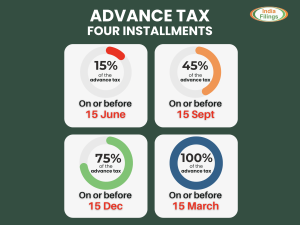
2️⃣ Pay final Advance Tax installment (15-Mar deadline)
3️⃣ Capitalize Capital WIP (depreciation planning)
4️⃣ Book Bonus/Incentive provisions (Section 43B compliance)

MARCH MIS FOCUS (Finsys MLG Clients):

Stock valuation accuracy (for March 31 closing)
Debtor confirmation letters & provision
Revenue recognition (special point for those in export and in Project industries )
MSME payment tracking (avoid disallowance)

MLG Finsys Support for Year-End:

•⁠ ⁠MSME payment tracking ( use automation in Finsys )
•⁠ ⁠Advance tax calculation module
•⁠ ⁠March closing checklist & alerts

Detailed note with updates and impact: By 8.30 PM today

Call for support: 9312608426 (MLG)
Tax advisory: MLG Associates team
No surprises in direct tax. Focus shifts to Business now.

Finsys ERP | MLG Associates | Integrated Accounting, ERP, BPO, MIS & Tax Solutions | www.mlgassociates.in | www.finsys.co.in |


Basic points, for Budget 2026. For Finsys and MLG Clients. …. in Simple language. … No hype, … No delay… Simple and To the Point.

Section 80JJAA Tax Benefits.. Must avail, in New Regime also

Section 80JJAA of the Income-tax Act is a powerful incentive

Section 80JJAA of the Income-tax Act is a powerful incentive that rewards businesses for creating stable, formal jobs, especially in the manufacturing sector, by giving them an extra deduction over and above the normal salary expense. From the ethos explained in Sangeet Gupta’s video, the spirit is simple: if you genuinely add new workers on your rolls, pay them properly, and keep them for a reasonable period, the law shares your burden by giving you a bonus deduction.

https://www.youtube.com/watch?v=iaplCI_L9Pk&t=111s

Core idea and spirit

Section 80JJAA allows an eligible business to claim an additional deduction of 30% of the “additional employee cost” (essentially wages of new qualifying employees) for three consecutive years, starting from the year in which the employment is created. In ethos terms, the section is not about clever tax planning; it is a policy tool to push industry owners to move from informal, temporary, or cash-based labour to formal employment with PF, records, and continuity.

The focus is on real job creation, not paper reshuffling of staff or shifting people from one group company to another merely to claim the deduction. The law therefore builds in several conditions to ensure that only genuine, incremental employment gets rewarded, which is very much the emphasis in the this video explanation as well.

Who can claim and for which business

The deduction is available where the assessee’s business is subject to tax audit under section 44AB, i.e., typically larger or more organised businesses whose gross receipts cross the audit thresholds. The benefit is designed primarily for businesses engaged in manufacture or production, and current guidance clearly excludes routine service-sector outfits from claiming 80JJAA.

The business should not be formed by splitting up or reconstruction of an existing business, and it should not be simply acquired from someone else, because that does not create new jobs in the economy; it merely changes the owner. In the ethos shared in the Sangeet Gupta content, this is repeatedly underlined: 80JJAA is for entrepreneurs who are actually expanding capacity, putting in more machines, and taking more workers on their own rolls, not for cosmetic restructuring

Conditions for employees to qualify

For a worker to be counted as an “additional employee”, several conditions must be met to reflect seriousness and continuity of employment. The employee must be employed in the previous year for at least 240 days, with a relaxed threshold of 150 days for specified labour-intensive sectors such as footwear, apparel, and leather.

The monthly emoluments of the employee should be less than ₹25,000, so that the benefit focuses on blue-collar and lower-income staff, not senior management or highly paid specialists. The employee must be participating in a recognised provident fund, and the salaries must be paid through proper banking channels, which again pushes employers away from cash wages and unrecorded headcount.

Certain categories are explicitly excluded: casual workers, contract labour supplied by contractors, and employees for whom the entire EPF contribution is borne by the government. In practice, as often stressed in professional explanations, this means that if the factory has a large portion of contract labour, shifting them onto the company’s own payroll and meeting PF conditions can unlock sizable 80JJAA benefits, while still aligning with the pro-worker intent of the law.

Quantum of deduction and its impact

Once the business and the employees satisfy all criteria, the business can claim a deduction of 30% of the additional employee cost for three consecutive assessment years. When combined with the regular deduction of 100% of salary as a normal business expense, this can effectively give a total tax-deductible impact of up to about 190% over the three-year period for those wages.

The ethos here is that the government is not merely reimbursing cost; it is giving a “bonus” for job creation that continues for three years, matching the idea of sustained employment rather than short-term hiring spurts. For promoters and CFOs who think in terms of ROI, the message in Sangeet Gupta’s style is that once you run the numbers, 80JJAA can meaningfully reduce the effective cost of each new worker if you plan your headcount and compliance correctly.

Compliance, documentation and mindset

To actually enjoy this benefit, the law requires disciplined compliance: the return must be filed within the due date, and the claim must be supported by a report from an accountant in Form 10DA. Proper payroll records, PF challans, and employee-wise details must be maintained, because any weakness here can lead to denial of deduction on scrutiny.

From an ethos perspective, this pushes businesses to upgrade their systems: better HR records, cleaner salary structures, consistent banking payments, and ERP-backed payroll become not just “good practices” but gateways to tangible tax savings. This is very much in tune with the Finsys narrative that robust ERP and process discipline convert legal provisions like 80JJAA from theoretical benefits into real cash-flow savings on tax.

Strategic and ethical implications

Section 80JJAA embodies a partnership between the State and the entrepreneur where both sides share the load of creating formal employment. If the employer is willing to step out of the comfort zone of casual and contractual manpower and is ready to take responsibility for PF, compliance, and long-term engagement, the tax system responds with a continuous, formula-based reward.

From the ethos reflected in the Sangeet Gupta content, the moral is that 80JJAA should not be treated as a loophole but as a nudge:

  • To regularise long-serving workers.

  • To build loyalty and stability in the workforce.

  • To use technology (like ERP and structured payroll) so that what is good for workers and compliant with law also becomes financially attractive for the enterprise.

When explained in simple words, 80JJAA is a classic “win–win”: workers get proper jobs and social security, the government moves more people into the formal economy, and the employer gets an additional tax deduction that can be substantial over three years if planned thoughtfully.

  1. https://tax2win.in/guide/section-80-jjaa
  2. https://paytm.com/blog/income-tax/section-80jjaa-income-tax-deduction-new-employment-generation/
  3. https://www.youtube.com/watch?v=iaplCI_L9Pk
  4. https://incometaxindia.gov.in/Acts/Finance%20Acts/2016/102120000000058877.htm
  5. https://finsys.co.in/wp-content/uploads/2019/03/Income-Tax-Section-80JJAA-Problems-and-possible-Solutions-ver-4-Aug-2018.pdf
  6. https://www.jiraaf.com/blogs/taxation/what-is-section-80jjaa
  7. https://www.tataaig.com/health-insurance/section-80jjaa-of-income-tax-act
  8. https://taxguru.in/income-tax/section-80jjaa-deduction-respect-employees-recruited.html
  9. https://cleartax.in/s/section-80jja-income-tax-act
  10. https://incometaxindia.gov.in/_layouts/15/dit/pages/viewer.aspx?grp=act&cname=cmsid&cval=102120000000064488&searchfilter=
  11. https://incometaxindia.gov.in/Acts/Finance%20Acts/1998/102120000000009210.htm
  12. https://finsys.in/news
  13. https://incometaxindia.gov.in/communications/circular/circular-no-03-2025.pdf
  14. https://www.youtube.com/c/sangeetguptafinsyserpsoftware/videos
  15. https://mlgassociates.in/wp-admin/post.php?post=2758&action=edit
  16. https://www.bajajfinserv.in/investments/section-80jjaa-of-income-tax-act
  17. https://www.youtube.com/watch?v=uC1MgF9Dibo
  18. https://www.bajajfinserv.in/investments/section-80jja-of-income-tax-act
  19. https://www.taxmann.com/research/income-tax/top-story/105010000000024065/deductions-under-section-80jjaa-of-the-income-tax-act-1961-experts-opinion
  20. https://www.youtube.com/playlist?list=PLmbWfGYzaUnewo4ygM4xvkR9MZbWbDX5r
  21. https://www.linkedin.com/pulse/section-80jjaa-detailed-understanding-examples-case-study-anil-diwan-kswdc

Partnership vs LLP , what to choose , why ? compare ?

Partnership vs LLP , what to choose , why ? compare ?

LLP Disadvantages

LLPs face higher compliance needs, including annual MCA filings like Form 8 and Form 11, plus audits above certain thresholds.

so if within family
Partnership firm is easy, and good

if with outsiders
then LLP is better

Second Factor

for small scale business : Partnership firm is sufficient
for medium/large scale.. LLP is better

Comparison Chart

Aspect LLP Advantages Partnership Advantages
Liability Limited to contribution; personal assets safe None—unlimited liability risks personal assets
Legal Status Separate entity with perpetual succession No separate entity; simpler but unstable
Management Flexible roles via agreement Quick decisions by mutual consent  + Flexible
Formation/Cost Moderate setup and filings Very easy
Lowest cost, minimal formalities
Closure Difficult Very easy
Lowest cost, minimal formalities


LLPs offer limited liability protection, while partnership firms expose partners to unlimited personal liability. Key differences in advantages and disadvantages stem from legal structure, compliance, and operational flexibility under Indian law.


Cost to “shut down” or close is considerable in LLP

EFFORT to close is considerable in LLP

So, if you are 100% serious and business has reached 5 crores p.a., then make a LLP

if business is yet to start… then no immediate need of LLP… start with Partnership Firm first.. that is our professional advise to MSME’s


ROC fees for delay in filing

Starts on per day basis

again… make LLP , only if you are serious about it

WordPress Image Lightbox